International Day of Older Persons Calls for Dignity in Longer Lives
The world marked the 36th International Day of Older Persons on Wednesday with a blunt question: if people are living longer, are societies built to let those extra years be healthy, secure and dignified?
The United Nations set the 2026 theme as “The Age of Longevity: Rethinking Systems for Longer Lives.” It asks governments, civil society, the private sector and older people themselves to rethink health systems, labour markets, pensions, housing and public finance so that added years do not become years of poverty, illness or exclusion.
UN Secretary-General António Guterres called longer life “one of the great achievements of our time,” and also a test. By 2050, the number of people aged 60 and over is projected to rise from about 1.2 billion to 2.1 billion — roughly one in five people worldwide. Persons aged 60 or over already number about 1.26 billion in 2026, about 15 per cent of the global population, and their share is projected to reach nearly 22 per cent by mid-century. The gap between life expectancy and healthy life expectancy was 9.6 years in 2019, a reminder that longer life is not the same as healthier life.
“Our elders are leaders and caregivers, playing a vital role in families, communities and economies,” Guterres said. “Together, we can design policies that ensure longer lives are also good ones — lived with choice, security, dignity.”
The main UN headquarters event is set for 8 October in New York. Parallel discussions in Geneva focused on a possible legally binding instrument on the rights of older persons, at the midpoint of the UN Decade of Healthy Ageing (2021–2030).
Uganda: wealth, care, and a funding gap
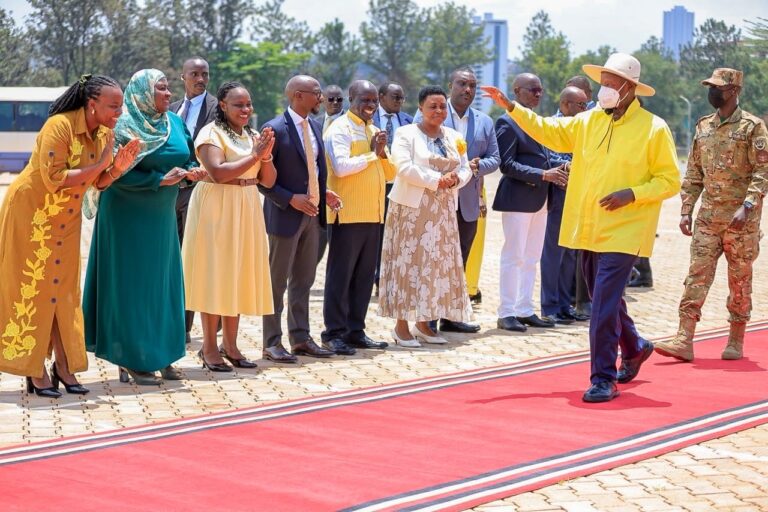
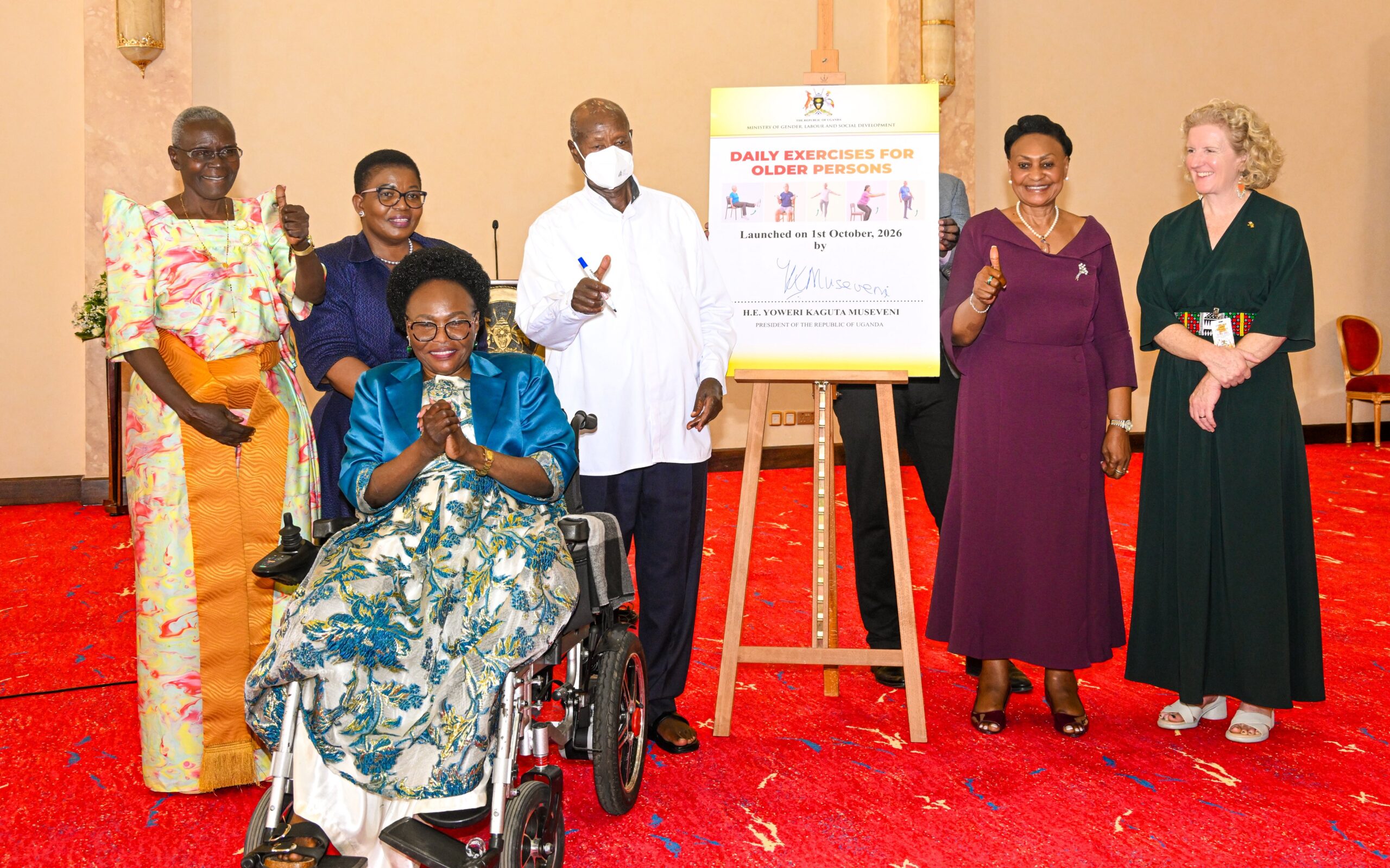
In Uganda, President Yoweri Kaguta Museveni officiated at the national commemoration at State House, Entebbe. The national theme was “Aging with Dignity: Strengthening Care and Support Systems for Older Persons.”
Museveni praised the role of elders in families and the economy, then warned against splitting family assets among children in ways that destroy accumulated wealth. He urged older Ugandans to use modern arrangements such as shareholding so property can stay intact and still benefit the family.
“Many older people start fragmenting their wealth to distribute it to their children instead of using modern inheritance methods such as shareholding,” he said.
He said government wants those who have built wealth to keep it, and those without assets to gain them through public programmes. He pledged a Parish Development Model package tailored to older persons, to be designed after financial pressure linked to the Africa Cup of Nations eases. Finance figures already put 538,024 people over 60 among PDM financial-inclusion beneficiaries, about 15 per cent of that pillar.
On health, Museveni proposed that government sponsor and recruit a geriatrician in every district to give free, consistent care. “It is, therefore, my view that the government should sponsor and recruit a geriatrician in each district to offer free and consistent medical support to the elderly,” he said.
The numbers behind the speeches are stark. The 2024 National Population and Housing Census counted about 2.3 million Ugandans aged 60 and above, roughly 5 to 6 per cent of the population. The Ministry of Gender, Labour and Social Development has projected the figure near 2.6 million in 2026. About 72 per cent of older Ugandans depend mainly on subsistence farming. Officials have said only about 7 per cent have formal social security, and about 99 per cent have no health insurance.
The Social Assistance Grants for Empowerment (SAGE) programme still pays Shs25,000 a month, and only from age 80 in practice. Cabinet has approved lowering the age to 65 and raising the grant to Shs35,000, but Minister of State for Older Persons Jacqueline Mbabazi told Parliament on 30 September that a Shs252 billion gap in the 2026/27 budget has stalled the expansion. Since the programme began, government has disbursed about Shs971.98 billion to a cumulative 515,405 older persons. In August, Parliament passed a motion calling for stronger geriatric care and social protection.
India and the wider push
Elsewhere, ministries used the day to point to existing schemes rather than new promises. In India, the Ministry of Social Justice and Empowerment highlighted the Atal Vayo Abhyuday Yojana (AVYAY), an umbrella programme covering shelter, protection and active ageing. The government has said Elderline, the senior-citizen helpline, operates in 32 states and union territories, and that 734 senior-citizen homes are supported under AVYAY. Rashtriya Vayoshri Yojana supplies assistive devices; by July 2026 more than 49.81 lakh devices had gone to over 9.23 lakh senior citizens. All people aged 70 and above are covered under an Ayushman Bharat extension of up to ₹5 lakh a year, regardless of income.
The African Commission on Human and Peoples’ Rights marked the day by warning that longevity in Africa will deepen inequality unless older people have income security, health care, autonomy and a real voice in decisions. Advocates worldwide made the same case: protection from poverty, abuse and exclusion, not ceremonial praise.
The day was established by the UN General Assembly in 1990 and first observed in 1991. Thirty-five years on, the argument has shifted. The question is no longer whether societies will age. It is whether pensions, clinics, housing and inheritance rules will be rebuilt in time for the people already living those longer lives — including the more than two million Ugandans over 60.
Get breaking news on WhatsApp
Breaking news, straight to your phone.