Dangote Breaks Ground on $16 Billion East Africa Refinery in Lamu Kenya
Nigerian billionaire Aliko Dangote and Kenyan President William Ruto led the groundbreaking ceremony on Wednesday, September 30, 2026, for the Dangote East Africa Petroleum Refinery in Mokowe, Lamu County, Kenya. The project, estimated at around $16 billion (with some figures ranging higher depending on included infrastructure), is designed to process 700,000 barrels of crude oil per day and is targeted for completion by 2030.
President Ruto confirmed the high-level attendance on X, noting that Presidents Yoweri Museveni of Uganda, Romuald Wadagni of Benin, and Jean-Lucien Savi de Tové of Togo, along with Ethiopian Prime Minister Abiy Ahmed Ali, were present in Lamu for the ceremony. Former Nigerian President Olusegun Obasanjo and representatives of other African governments also attended.

The facility is positioned as East Africa’s largest refining project and the second-largest on the continent after Dangote’s plant in Lekki, Lagos.
Project Scale and Ambitions
The refinery will sit within the Lamu Port-South Sudan-Ethiopia Transport (LAPSSET) corridor, leveraging Kenya’s deep-water port at Lamu. It aims to supply refined petroleum products across East Africa, reducing reliance on imports that currently drain foreign exchange. Regional demand for petroleum products is estimated at 20–30 million metric tons annually. Officials project the plant will help lower fuel costs, support industrialization, and spur related industries such as petrochemicals and bitumen production.
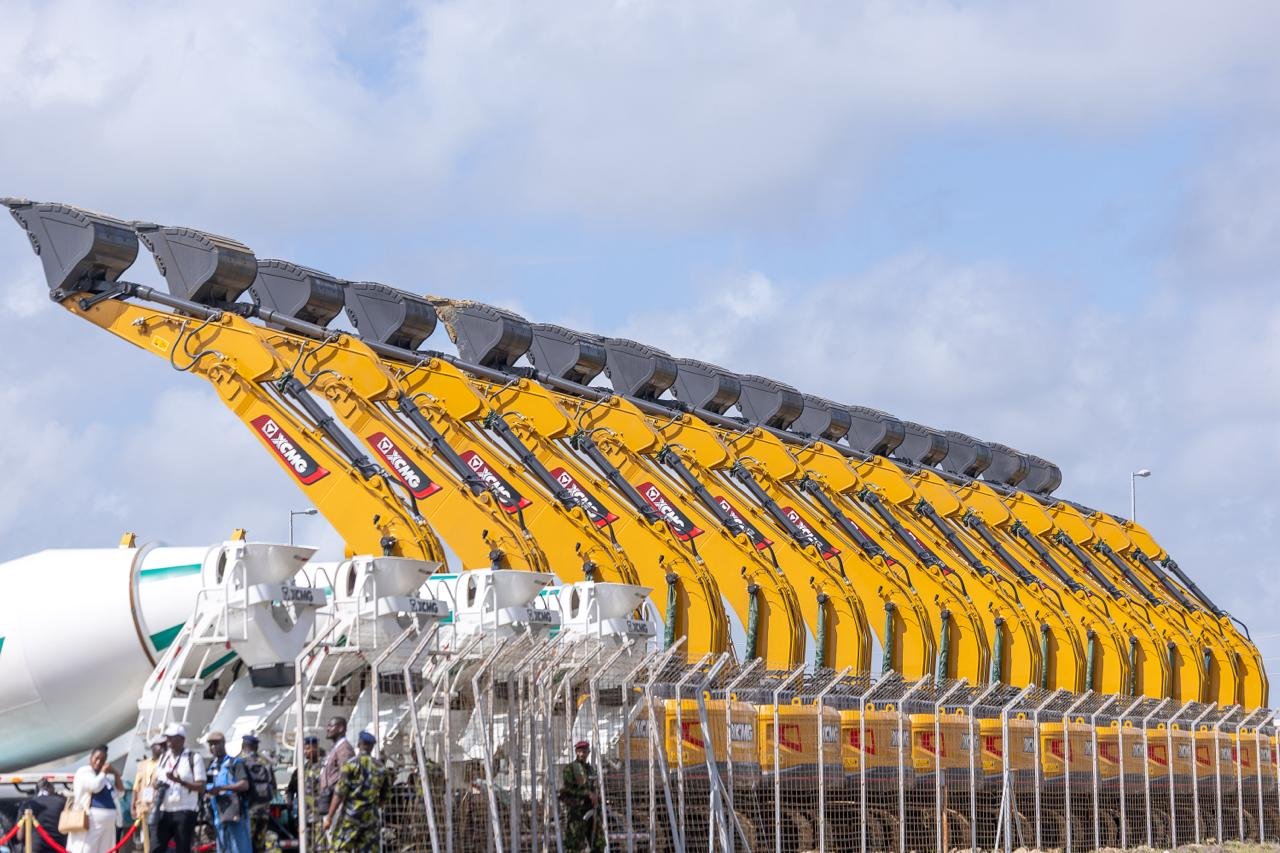
Dangote has offered East African governments a combined 30 percent equity stake. Kenya is positioned for a significant share (reports often cite a target around 10 percent). The project is expected to create approximately 50,000–60,000 direct and indirect jobs. Additional features include a planned 1,000-megawatt power plant, with a portion of the electricity potentially available to Kenya’s grid. Financing is structured roughly as 70 percent debt and 30 percent equity. Machinery has already begun arriving at Lamu Port ahead of construction.
Dangote has framed the project as part of a broader push for African self-sufficiency in processing resources rather than exporting raw materials and importing finished products. He has drawn parallels to his Nigerian refinery and cited lessons from that experience to support a faster build timeline (some statements point to around 40 months or under four years).
Controversies and Criticisms
The project has faced local opposition and legal challenges. Residents in the Hindi/Manda Magogoni area, including a group of about 133 people, have protested over land compensation and claimed long-standing occupancy and use of portions of the site. The Environment and Land Court in Malindi issued orders maintaining the status quo on the disputed land (LR No. 13061) pending a hearing around mid-October 2026. The court did not halt the groundbreaking ceremony itself, though some site activities could be affected.
Dangote has downplayed the protests, attributing some opposition to commercial interests that stand to lose from reduced fuel imports, and insisted the project will proceed on schedule. Environmental concerns have also been raised regarding potential impacts near sensitive areas, including proximity to Lamu Old Town (a UNESCO World Heritage site).
On the political front, Kiharu MP and People’s Party of Kenya leader Ndindi Nyoro has called for greater transparency. He has demanded public disclosure of shareholders, details of land deals, and contracts, arguing that Kenyans deserve clarity on ownership of such a major investment. Nyoro has also noted that prior administrations contributed to Lamu’s infrastructure foundations.
Outlook
Supporters, including Kenyan officials, describe the refinery as a potential game-changer for regional energy security, industrialization, and economic development in Lamu and beyond. Critics emphasize the need for clear accountability on ownership, fair compensation for affected communities, environmental safeguards, and reliable crude supply arrangements (drawing on regional sources such as potential Turkana output, Ugandan production, and imports).
Construction is set to advance following the ceremonial groundbreaking, with the project’s ultimate success depending on financing execution, resolution of land issues, infrastructure readiness, and market conditions. The facility represents one of the largest private-sector industrial investments in Kenya’s history and a major expansion of Dangote’s refining footprint outside Nigeria.
Get breaking news on WhatsApp
Breaking news, straight to your phone.