
Ugandan Shilling Hits Historic 4,000 Mark Against US Dollar
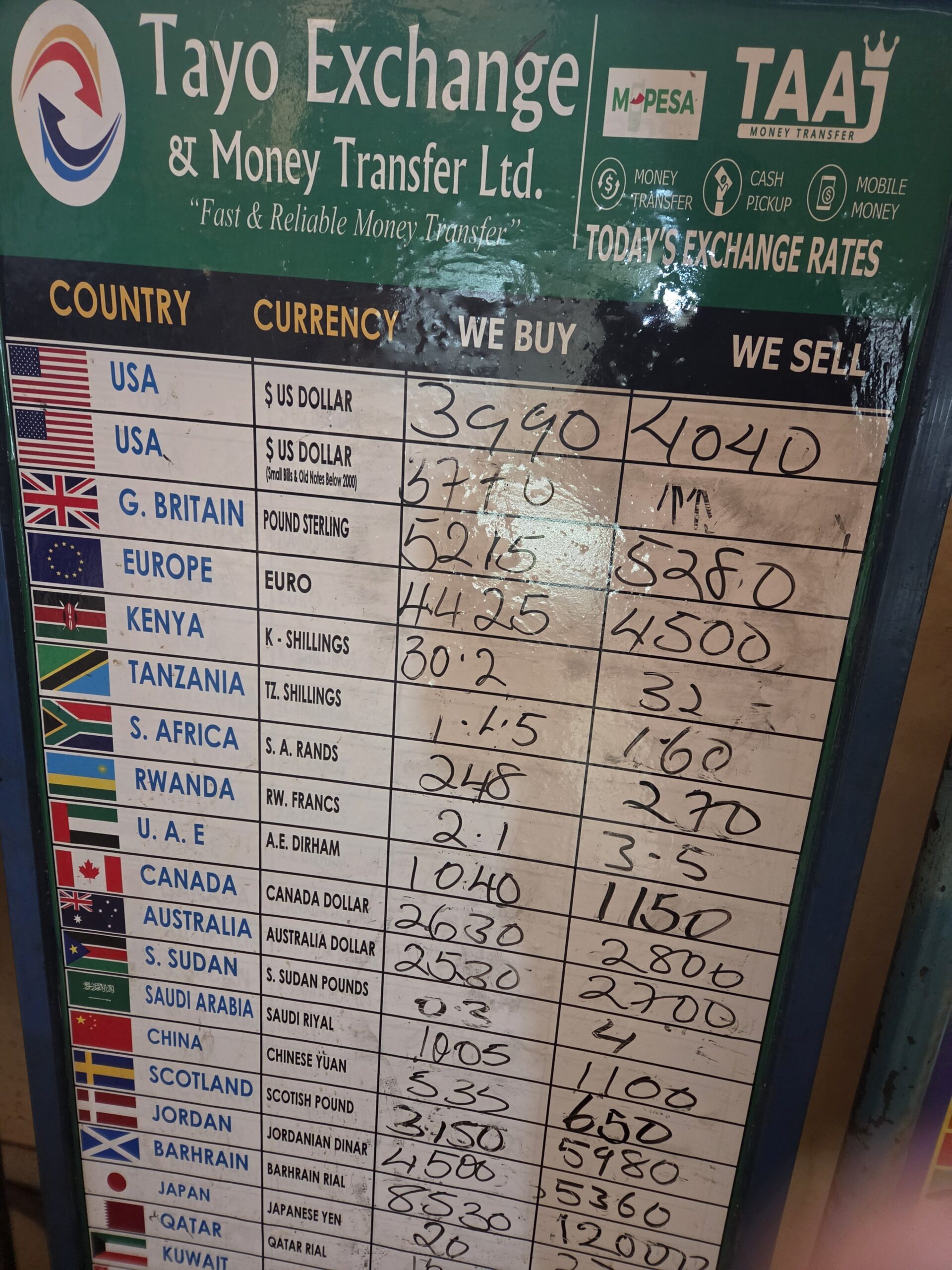
The Uganda shilling crossed the 4,000 mark against the US dollar on Monday, 5 October 2026, a level dealers and household budgets have been watching for weeks.
Market screens put the USD/UGX rate at about 4,019 during the session, with some mid-market quotes printing above 4,020 and intraday highs near 4,030, depending on the source. A week earlier the unit was still in the low 3,900s. On 1 October, New Vision reported a fresh record around 3,970/3,980, after the shilling opened near 3,920/3,930 and lost about 1 percent in a single session.
What pushed it through 4,000
Traders point to the same pressure that opened the month: dollar demand from offshore investors trimming local bond holdings, plus ongoing needs from energy and manufacturing. Uganda imports all of its refined fuel and a large share of industrial inputs, medicines and consumer goods, so those buyers have to pay in dollars regardless of the rate.
The move sits on a longer slide. Over the past year the shilling has lost roughly 13 to 15 percent against the dollar. In early October 2025, one dollar bought about 3,460 shillings. By the start of 2026 it was near 3,620. It is now above 4,000.
The Bank of Uganda has stayed in the market mainly through liquidity operations — repos and central bank bills — rather than a public defence of a particular level. Officials are watching the print against a wider patch of regional currency weakness and a trade deficit that leaves the shilling short of dollar supply.
Who feels it
For most residents, a weaker shilling shows up first at the pump, then in shop prices. Fuel, imported food, medicines, spare parts and school supplies all cost more in shillings when the dollar rises. Wages and informal incomes do not reset on the same day, which is why the 4,000 print has already drawn calls for pay to keep up.
There is a smaller group on the other side of the trade. Coffee and other export receipts convert into more shillings. Families receiving remittances from abroad also get more local currency per dollar sent home. That gain is real, but it does not offset higher import costs for the wider economy.
What to watch next
The 4,000 level is psychological as much as technical. If offshore selling and import demand stay firm, dealers will test whether the rate holds above it or slips back toward the high 3,900s. A pause would need either softer dollar demand or fresh foreign-exchange inflows. Neither is guaranteed this week.
For households, the practical question is simpler: how fast pump prices, rent denominated in hard currency, and the weekly shop adjust — and whether incomes move at all.
Rates cited are market prints on 5 October 2026 and vary by source and time of day. This is not financial advice.
Get breaking news on WhatsApp
Breaking news, straight to your phone.