Attorney General says 2021 digital number plates contract does not bind the State
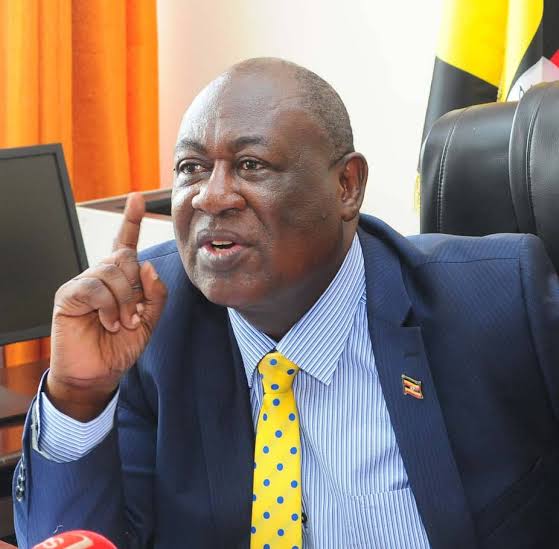
Kampala — Attorney General Sam Mayanja has told Parliament that the July 2021 contract with Russian firm Joint Stock Company Global Security does not bind the Government of Uganda, after finding that the deal breaks core provisions of Ugandan law and never met conditions that go to the root of the agreement.
Appearing before the Committee on Physical Infrastructure, chaired by Mbarara City South MP Mwine Mpaka, Mayanja said he had reviewed the contract and could not treat it as a binding instrument of the State.
“Before I came here, I looked through this contract,” he told MPs. “I think this contract from the onset contradicts many provisions of our existing law.” He later went further: “I think I would go ahead and say, as Attorney General, I see no contract here to comment on. There’s no contract which binds the State of Uganda because none of the conditions which go to the root of the matter have been fulfilled.”
A central objection is the revenue model. Under the arrangement, the private contractor was to take the bulk of traffic fines — reported at about 80 percent — with government receiving 15 percent and the National Enterprise Corporation (NEC) 5 percent. Mayanja told lawmakers that fines are public revenue and cannot lawfully be collected, or largely retained, by a private company. He also said the agreement assumed a complete system, a financing model, regular audits and an Attorney General’s representative on the platform. “That’s not what we have,” he said. “We have something else. I have no name for it.”
What the contract was meant to do
The agreement, signed on July 23, 2021, was a 10-year deal for the Intelligent Transport Monitoring System (ITMS). Joint Stock Company Global Security was to build, run and later hand over a system of digital number plates, vehicle tracking, cameras and related infrastructure, sold to the public as a tool for crime detection and vehicle identification.
Security Minister Jim Muhwezi signed the deal and, at the time, defended it as a security project cleared by the Solicitor General. He told Parliament in 2023 that government was not putting money into the project and that the investor had to recover its outlay. This week he has stressed that digitisation of plates is one part of an ITMS launched in 2019 under the Ministry of Works and Transport, and that the security objective was guided by President Yoweri Museveni. Critics read the later statement as an attempt to step back from a project he previously championed.
Parliamentary figures put the contractor’s investment obligation at about $257 million, with projected revenues of roughly $996 million — about Shs3.6 trillion — over 10 years from plates, services and fines. Officials have told MPs the firm had invested about $115 million by July 20, 2026. The committee has also been told that no proper feasibility study guided the final contract.
Motorists already paying
While the legal status of the deal is now in dispute, motorists have been required to pay Shs714,300 for a first-time digital plate on a vehicle or motorcycle. Boda boda unions say that is more than four times the old charge of about Shs125,000. A 2023 parliamentary report had examined a kit cost of about Shs630,000 and recommended the higher charge as part of the financing model. Lawmakers are now asking who fixed the figure, and two officials have been questioned over a pricing breakdown that left part of the fee unexplained.
Supply has also faltered. The committee has heard that daily output fell sharply in 2026, that some upcountry centres suspended issuance, and that delays were costing more than Shs4 billion a week in lost revenue. Car dealers and manufacturers have asked government to end the monopoly. The contractor’s project manager, Damir Makhmutov, has blamed some delays on disrupted consignments and said the firm can install far more kits than it has recently delivered. On technology transfer, he told MPs that formal handover begins in 2031, but that training of Ugandan staff and police has already started.
Defence Minister Kiryowa Kiwanuka gave a different account of the local partner. He said NEC has never been effectively involved, that land it provided was not used as intended, and that it has not received its 5 percent share of fine revenue. He described that as non-performance and a material breach of the cooperation agreement.
The termination warning
Governance campaigner Anthony Natif has cautioned that a headline declaring the contract “null and void” may run ahead of the legal effect of the Attorney General’s remarks, and that the written deal contains termination clauses that could still leave the taxpayer exposed.
He pointed to the 2015 vehicle-inspection contract with SGS, suspended after a similar political and parliamentary fight. Government later settled that dispute in 2023 for more than UGX 109 billion. Natif said some of the same officials are again before the same committee, and that no one was held accountable for the earlier payout. “The taxpayers are being slow walked into yet another expensive multimillion dollar loss,” he wrote.
The committee has arranged to meet President Museveni through the Speaker’s office and has summoned officials involved in the original procurement. Representatives of the Russian firm are expected back before Parliament as MPs compile a report on legality, cost, delays and oversight.
What remains unresolved is practical as well as legal: whether plates already issued stay in force, what happens to money motorists have paid, and who bears the cost if the State walks away from a project its own Attorney General says never bound it.
Get breaking news on WhatsApp
Breaking news, straight to your phone.