Kenya Confirms First Imported Ebola Case from DRC, Patient Dies
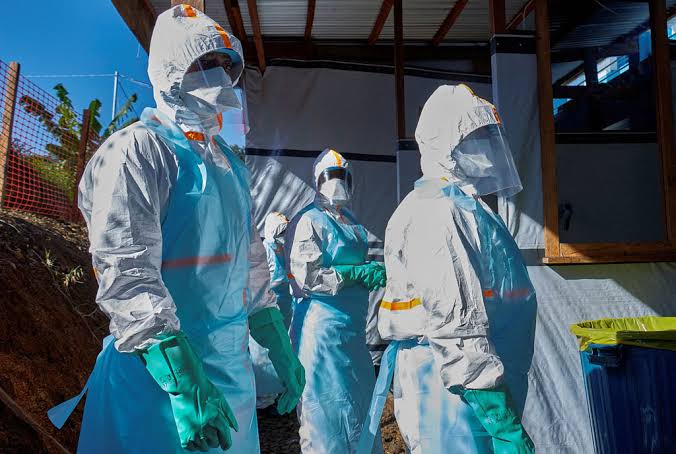
Kenya has confirmed its first imported case of Ebola Bundibugyo virus disease. A Kenyan citizen who had lived in the Democratic Republic of Congo for seven years died in Nairobi on Monday night after dual laboratory tests returned positive, Health Cabinet Secretary Aden Duale said on Tuesday.
The Ministry of Health said the patient fell ill about a month ago and was treated at several facilities in the DRC before travelling home. He went by road from the DRC to Kampala, then boarded Jambojet flight 8523. The aircraft, carrying 23 passengers and four crew, landed at Jomo Kenyatta International Airport at 1:10 p.m. on Saturday, 3 October. He passed routine public health and immigration screening. Health officials later said medication may have masked his symptoms at the airport.
A relative and a friend then drove him to Nairobi Hospital. Staff isolated him in a separate room in the accident and emergency department and later moved him to the hospital’s East Wing isolation facility, built during the Covid-19 pandemic. He developed fever, chills, intense fatigue and weakness, muscle pain, painful swallowing, a sore throat, and bleeding under the skin at injection sites. Doctors suspected a viral haemorrhagic fever from the symptoms and the travel history, and collected samples.
Both the National Virology Reference Laboratory, run by the National Public Health Institute, and the Kenya Medical Research Institute laboratory confirmed Ebola Bundibugyo virus. He was given supportive care and died at about 11:30 p.m. on Monday, 5 October. Duale offered condolences to the family. A safe and dignified burial, under Ebola protocols, was planned for later on Tuesday.
Contact tracing is under way. The ministry has identified 28 contacts so far, including family members and health workers, and is tracing the 23 passengers and four crew who shared the flight. People judged to be at risk are being lined up for quarantine.
Kenya has been on heightened alert since the DRC outbreak was declared in May 2026. As of 6 October, authorities had screened 652,584 travellers and tested 267 samples in five laboratories — the national reference lab, KEMRI sites in Nairobi and Kisumu, and mobile labs at the Busia and Lwakhakha border points. Only this case has tested positive.
The regional picture is already established. The World Health Organization’s latest published figures, to 23 September, put the DRC outbreak at 7,890 confirmed cases and 3,799 deaths, a crude case fatality of about 48 percent, across 63 health zones in seven provinces. Ituri remains the centre. BBC reporting on Tuesday described more than 4,000 deaths and called it the second most deadly known Ebola outbreak. Uganda recorded 20 cases and two deaths earlier in the year and was declared free of the disease in August. Kenya is the latest country to record a case linked to the epidemic.
Bundibugyo is a rarer Ebola species. There is no licensed vaccine or specific treatment for it. The Zaire vaccine, Ervebo, does not cover this strain outside research protocols. The virus spreads through direct contact with the blood or body fluids of a sick or dead person, or with contaminated objects. It is not spread through the air.
Duale urged the public to stay calm, follow official guidance, wash hands regularly, and avoid close contact with people arriving from areas with active transmission. Anyone with symptoms and a relevant travel history should seek care and can call the toll-free line 719. The ministry said containment measures are in place and that a single imported case, caught in isolation, is not evidence of community spread in Kenya.
Get breaking news on WhatsApp
Breaking news, straight to your phone.