PM Nabbanja urges agency leaders to end silos for $500 billion economy goal
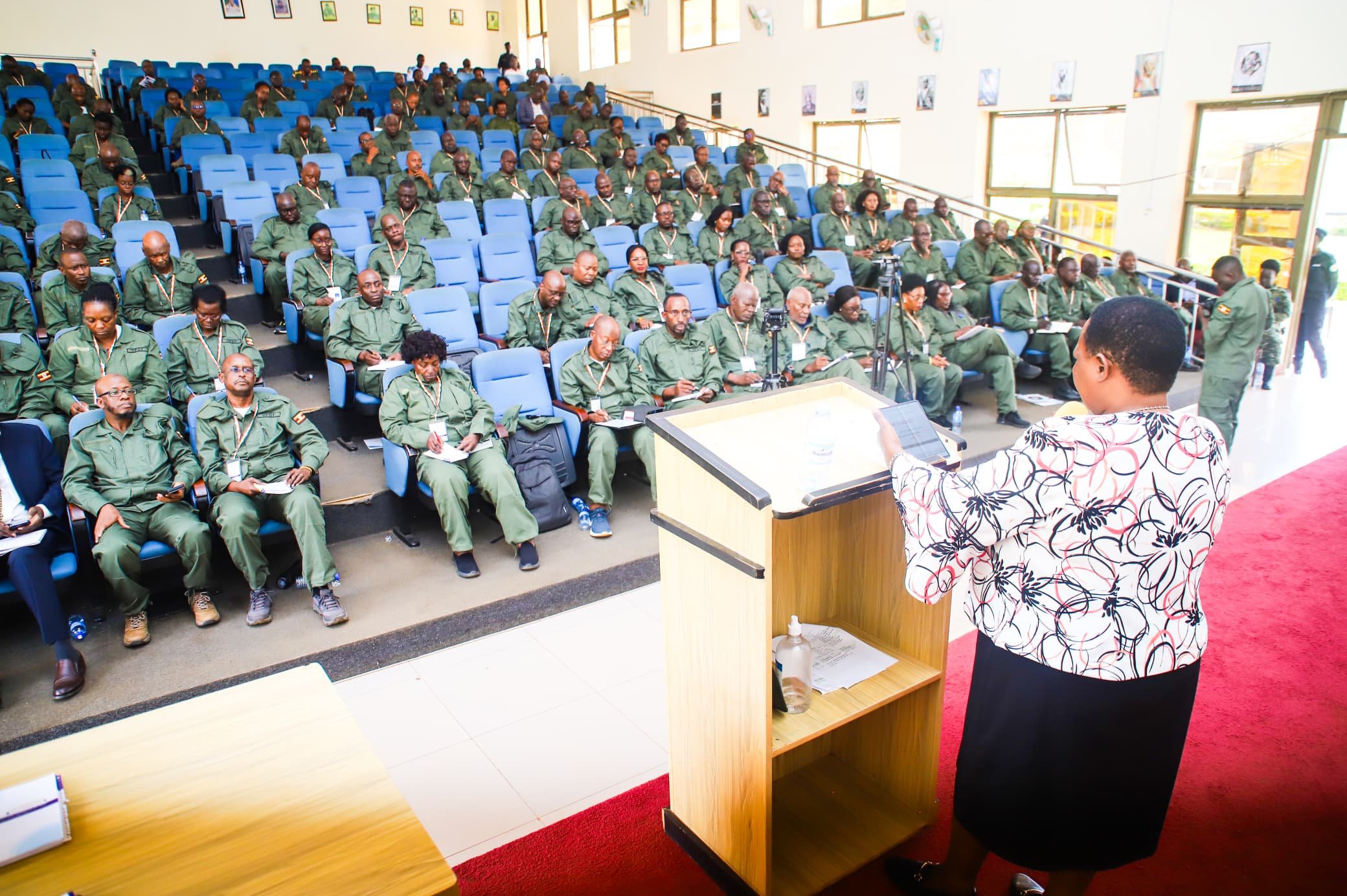
Kyankwanzi — Prime Minister Robinah Nabbanja has told board chairpersons and chief executives of government agencies that Uganda will not reach a $500 billion economy by 2040 if public institutions keep working in isolation.
She closed a five-day Public Sector Institutions Leadership Retreat on Friday, October 2, 2026, at the National Leadership Institute (NALI) in Kyankwanzi. The meeting, themed “From Governance to Impact,” brought together 140 leaders from 88 state institutions, including commercial banks, public universities, referral hospitals, regulators and other agencies.

“No single agency can achieve the ambition of growing the size of our economy to USD 500 billion by 2040 alone,” Nabbanja said. She called for a whole-of-government approach in which ministries, departments and agencies share information, coordinate programmes and judge themselves by results for citizens, not by institutional boundaries.
“This is not an ordinary retreat,” she told the closing session. “It comes at a time when government is placing increasingly more emphasis on implementation, execution, accountability, and measurable results.” Governance, she said, is a means to impact, not the destination. “Let us move from plans and institutional silos to overall government outcomes, from compliance to performance, and from governance to impact. Let the institutions not merely exist, but rather deliver.”
She charged the executives to return to their institutions and lead with discipline, integrity and coordination.
Why the target needs one government
The $500 billion figure is the headline of the government’s Tenfold Growth Strategy, which aims to expand the economy roughly tenfold by 2040 from a base near $50 billion in 2023. Officials have since reported stronger recent performance: the Ministry of Finance has put the size of the economy at about $69.3 billion by the end of June 2026, after growth of about 6.4 percent in the 2025/26 financial year.
The strategy rests on four anchors: agro-industrialisation, tourism, minerals including oil and gas, and science, technology and innovation. Hitting the 2040 mark would require growth well above recent rates for a sustained period. Nabbanja’s argument in Kyankwanzi was that the constraint is not only money or policy. It is also how the public sector is organised. Duplicated mandates, weak handovers between agencies and boards that do not hold management to national priorities slow delivery even when plans exist.
Delegates were asked to line their institutions up with the Fourth National Development Plan and the tenfold strategy, fix lapses in performance management, and agree priorities that produce measurable results.
How the retreat opened
The retreat ran from Sunday, September 28, to Friday, October 2. It was organised by the Civil Service College Uganda and the Public Sector Chairpersons’ Forum, a body launched at the Office of the President in October 2024 to give chairpersons of public bodies a shared platform on oversight and governance. Lucy Nakyobe, Head of Public Service and Secretary to the Cabinet, is patron of the forum.
Minister of State for Public Service Lydia Wanyoto Mutende opened the meeting on behalf of Public Service Minister Gen. (Rtd) Edward Katumba Wamala. She urged boards and chief executives to collaborate across government, rebuild public trust, balance day-to-day operations with modern governance standards, and take up digital transformation. She described the five days as a chance to rethink institutional priorities and restore citizen confidence in service delivery.
NALI Director Col. Okei Rukogota asked agencies to keep working with the institute as they implement the national transformation plan.
Governance, not just coordination
Other sessions pressed the same point from different angles.
Deputy Inspector General of Government Anne Twino told chairpersons and chief executives that the leap from about $50 billion to $500 billion will not happen through weak oversight, institutional conflict or corruption. She drew a hard line between roles: management manages, boards govern. She warned against governance failures that undermine performance and pointed to the Rationalisation of Agencies and Public Expenditure (RAPEX) policy, under which Cabinet has sought to streamline more than 150 semi-autonomous agencies, cut duplicated roles and reduce recurrent spending.
National Environment Management Authority executive director Barirega Akankwasah argued that the tenfold strategy also depends on how land, water and forests are managed. Without that, he said, socio-economic transformation will not hold.
National Water and Sewerage Corporation managing director Silver Mugisha, one of the participants, said lessons from the week would feed into how the utility plans infrastructure and delivers water and sewerage, and that the corporation’s attendance was meant to align it with national development goals.
What participants left with
By the close, organisers said delegates had identified bottlenecks in service delivery, agreed national priorities and committed to tighter accountability frameworks. Nabbanja’s closing charge was practical: stop treating each agency as a separate republic, share information, and measure success by impact on citizens.
Get breaking news on WhatsApp
Breaking news, straight to your phone.