Museveni Pledges Shs125 Billion to Uganda Doctors’ SACCO to Boost Health Workers’ Welfare and Training
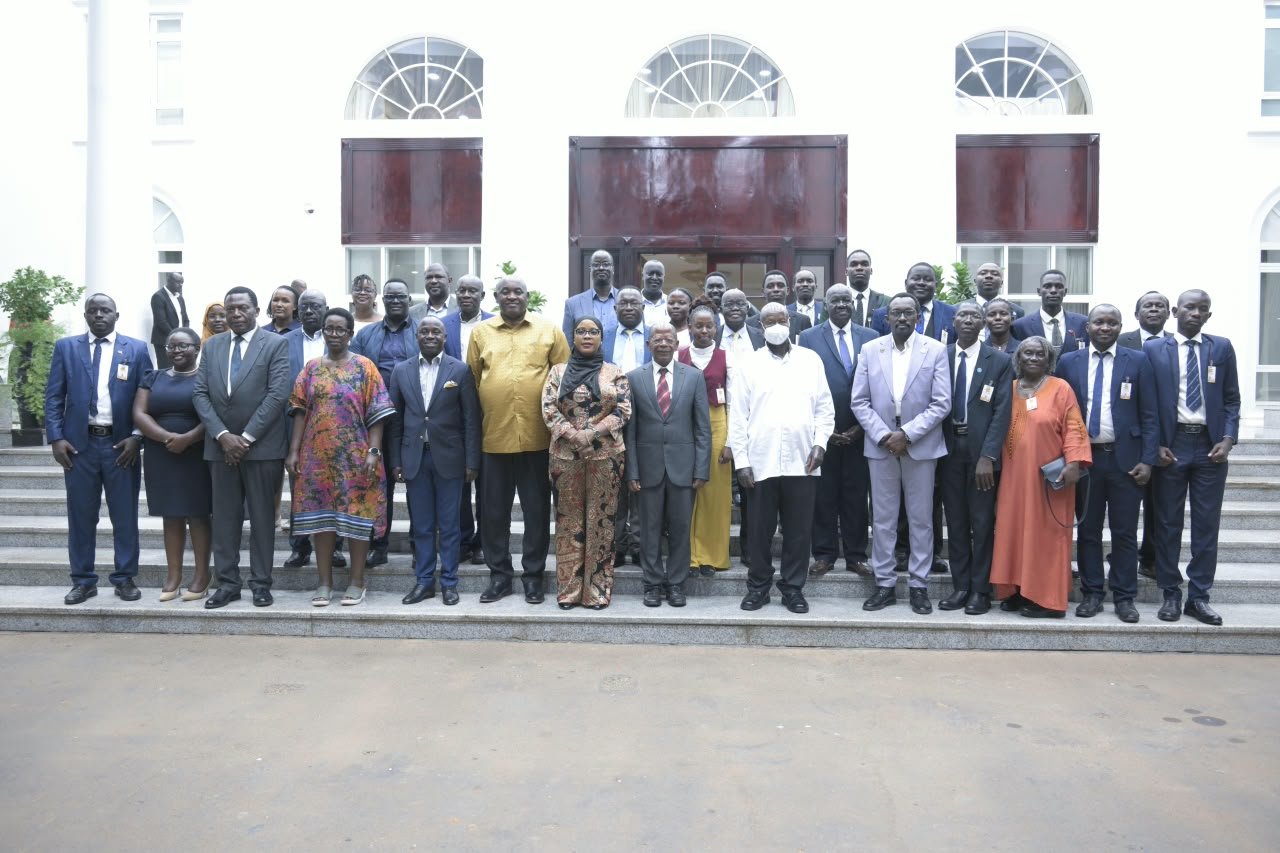
President Yoweri Museveni has pledged Shs125 billion as a one-time investment in the Uganda Medical Association (UMA) Savings and Credit Cooperative Organisation (SACCO). The commitment, made on Friday, October 9, 2026, during a meeting with UMA leaders and medical interns at State House Entebbe, aims to give health workers access to affordable loans for further training, specialisation, and business ventures.
The meeting, led by UMA President Dr Frank Asiimwe, focused on doctors’ welfare, gaps in medical training, supply shortages, internship challenges, and broader efforts to strengthen Uganda’s healthcare workforce. Museveni described the Shs125 billion fund as a smart, non-recurrent investment rather than ongoing government expenditure.
“Regarding the issue of wanting Shs125 billion where the doctors can borrow and, if possible, employ themselves, that one I will support. This is not recurrent. It is a one-time process. Even that is a smart move, and I will support it,” the President said. He added that the money would help doctors upgrade their skills through private institutions while government continues prioritising its own specialisation programmes.
Building on Past Success
The pledge builds on a Shs1 billion contribution Museveni made to the UMA SACCO in 2017. Dr Asiimwe told the meeting that the earlier sum has since grown to Shs13 billion, demonstrating the SACCO’s potential to improve financial access for health workers. He thanked the President for the new commitment and for giving interns a direct platform to raise their concerns.
Asiimwe also highlighted the value of public-private partnerships in training, deployment, promotion, accountability, monitoring, quality control, and data sharing. He called for better recognition of doctors working in both public and private facilities and requested two annual face-to-face meetings with the President to review health sector priorities.
Intern Allowances and Training Reforms
A major discussion point was the long-running dispute over medical intern allowances. Museveni said the government would pay Shs2 million in allowances this year while broader talks on remuneration continue. He questioned why sponsors who support students through medical school would withdraw support during the one-year internship, but kept the door open for further discussion based on interns’ welfare and government capacity.
The issue has been contentious for years. In 2021 Museveni announced a Shs2.5 million monthly allowance, later reduced to around Shs1 million citing budget constraints. Recent policy proposals that distinguished between government- and privately sponsored interns (or reclassified internship purely as training) triggered protests and temporary service disruptions. Cabinet had earlier restored roughly Shs1 million net facilitation for the current cohort pending a wider review.
Museveni also criticised the policy that ties medical school graduation to completion of internship, saying the Ministry of Education and Sports had erred and that the two processes should be separated. He indicated the policy would be corrected.
Additional Support and Proposals
The President expressed support for tax exemptions for health workers and a duty-free arrangement for essential medical supplies and equipment used in service delivery.
UMA leaders put forward several other proposals, including:
- Introduction of three additional career grades (Chief Consultant, Principal Consultant, and Senior Consultant) to improve progression below the Director General level.
- Raising staffing levels in referral hospitals to 75 percent by the next general election.
- A retirement package for health workers comparable to that of security personnel.
- Regional medical hubs of 50–100 beds for mentorship and practical training.
Health Minister Dr Chris Baryomunsi thanked Museveni for sustained attention to the sector, noting that universal education policies had expanded the number of universities training doctors from one to 13. He and Permanent Secretary Dr Diana Atwiine also referenced gains in immunisation, HIV response, life expectancy, and reductions in infant and maternal mortality, while stressing the need to prioritise within available budgets.
At the close of the meeting, interns welcomed the President’s commitments and pledged continued cooperation with the Ministry of Health to improve service delivery.
Significance
The Shs125 billion injection, if fully realised, would significantly expand the UMA SACCO’s capacity to provide low-cost credit. In a sector marked by chronic workforce shortages, high training costs, and recurring disputes over intern welfare, the move is intended to help retain talent, support specialisation, and encourage health workers to create their own employment opportunities. Implementation details—including timelines, disbursement mechanisms, and any conditions—are expected to be clarified through subsequent government processes.
Get breaking news on WhatsApp
Breaking news, straight to your phone.